The highest peaks and their first ascents: a history of mountaineering
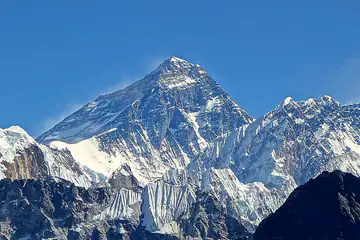
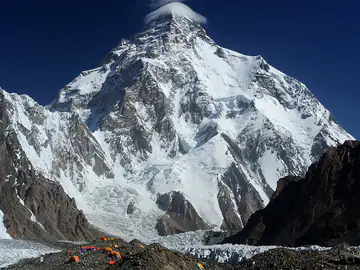
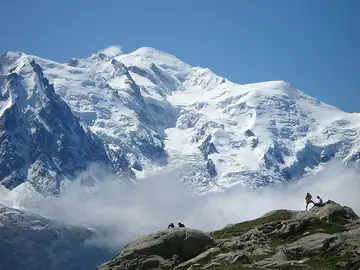
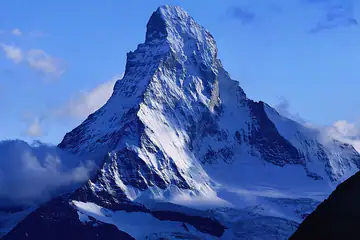
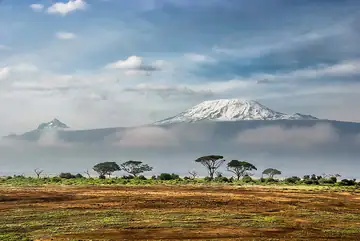

Mountains ask two very different questions in Comparo: which is higher? and which was climbed first? The second is often more surprising, because the order of conquest does not follow the order of height at all. Here are the numbers in our database, and the story they tell.
The “eight-thousanders”
Earth has fourteen peaks above 8,000 metres, all in the Himalaya and Karakoram. Here are the highest in our database:
| Peak | Height |
|---|---|
| Everest | 8,849 m |
| K2 | 8,611 m |
| Kangchenjunga | 8,586 m |
| Lhotse | 8,516 m |
| Makalu | 8,485 m |
| Cho Oyu | 8,188 m |
| Nanga Parbat | 8,126 m |
| Annapurna I | 8,091 m |
Outside Asia, no summit reaches 7,000 metres: the highest, Aconcagua in Argentina, tops out at 6,961 m, followed by Ojos del Salado (6,893 m), the highest volcano in the world.
Elsewhere in the solar system
The absolute record in our database is not on Earth: Olympus Mons, on Mars, rises about 21,900 m above the Martian datum, nearly two and a half times Everest. This giant volcano could grow so tall because Mars’s gravity is weaker and its crust does not move like Earth’s plates: lava piled up in the same place for hundreds of millions of years.
Climbed first: the big trap
Here are some first-ascent dates recorded in our database:
| Peak | First ascent |
|---|---|
| Mount Fuji | c. 663 (first recorded ascent) |
| Mont Ventoux | 1336 |
| Mont Aiguille | 1492 |
| Mont Blanc | 1786 |
| Matterhorn | 1865 |
| Kilimanjaro | 1889 |
| Aconcagua | 1897 |
| Denali | 1913 |
| Annapurna I | 1950 |
| Everest | 1953 |
| K2 | 1954 |
| Mount Vinson (Antarctica) | 1966 |
A few lessons:
- Accessible summits were climbed very early. Mount Fuji, a sacred mountain in Japan, was already being climbed in the 7th century. Mont Ventoux was climbed in 1336: the poet Petrarch left an account of the ascent, often presented as one of the first made “for the view”.
- Modern mountaineering was born on Mont Blanc. Its first ascent in 1786, by Jacques Balmat and Michel Paccard, is regarded as the founding act of mountaineering.
- The Matterhorn held out until 1865. Its first ascent, led by Edward Whymper, ended in tragedy: four members of the party died on the descent.
- The eight-thousanders only fell after the Second World War. Annapurna, climbed in 1950 by a French expedition, was the first peak above 8,000 m to be conquered. Everest followed in 1953 with Edmund Hillary and Tenzing Norgay, K2 in 1954.
The classic trap in the game: pitting a famous, very high peak against a more modest but remote mountain. Kilimanjaro (1889) was climbed before Denali (1913), and Denali long before Everest, even though Everest has been famous for far longer.
Height and difficulty don’t go together
K2 is lower than Everest, but it is reputed to be far harder and more dangerous: steeper slopes, more unstable weather, more technical routes. Annapurna long remained the deadliest eight-thousander relative to the number of ascents. Conversely, Kilimanjaro, almost 6,000 m high, can be climbed without technical climbing, which does not make it easy because of the altitude.
How to win these duels
- Height: above 7,000 m, the answer is almost always in Asia.
- First ascent: think about access and era. An easy-to-reach summit in Europe or Japan may have been climbed centuries before a remote or very high one.
- The eight-thousanders were all climbed between 1950 and 1964.
Where the numbers come from
Heights are the latest official surveys (8,849 m for Everest, the 2020 China–Nepal measurement); dates are those of the first documented ascents. See our method.