How we check our numbers: the Comparo method


Comparo rests on a simple promise: every card is a real number. A comparison game is only as good as its data. One wrong value, and a right answer becomes a wrong one. Here is how we build, check and maintain the thousands of values in the game.
1. A database of cards, not hand-written questions
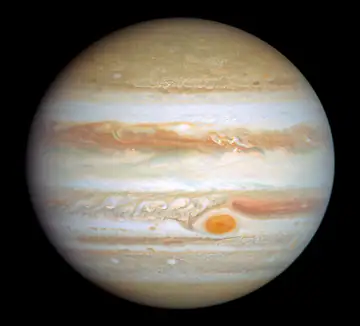
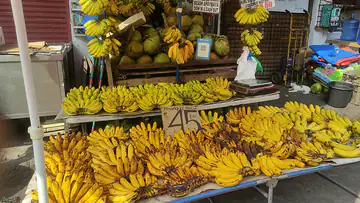
The game does not contain a list of questions. It contains a database of fact cards: the Eiffel Tower, the cheetah, Jupiter, the banana… Each card holds several measurable values (height, speed, year, calories, number of followers…). Questions are then generated by picking two cards that share the same kind of value.
This setup has one major advantage: a value is entered only once. If we correct the height of a monument, every question that uses it is corrected at the same time.
2. Public, identified sources
Every card is linked to a source. Depending on the field:
- Encyclopedias and open databases: Wikipedia and Wikidata for most monuments, places, people and objects, with a link to the source article on every card.
- Official bodies: the US Department of Agriculture’s FoodData Central for nutrition values, space agencies for planets and probes, sports federations for honours lists.
- Published rankings: for example Forbes rankings for athletes’ earnings, published box-office figures, IMDb or Metacritic scores.
When two serious sources disagree, we keep the most widely accepted value and, if the gap is large, we record a range rather than a single figure.
3. Dated values when they change
Some data moves: a follower count, a sports record, a box office still running, an IMDb score. For these, the card states the date of the data (for example “data as of October 2026”), and that date is shown in the game before the answer. Nobody should lose a point because a number has moved since.
Stable values (a birth date, the height of a monument, the speed of sound) are not dated.
4. Uncertainty is acknowledged
Many figures are not exact to the metre: a dinosaur’s weight is reconstructed, an animal’s speed varies between measurements, a chili’s heat depends on the harvest. In these cases, the card contains:
- a reference value, shown with the “≈” sign;
- a range (minimum and maximum) when sources vary;
- a note on the measurement: “in a dive”, “adult male”, “including antenna”, “cruise”.
5. The rules that prevent unfair questions
This is the most important part, and the least visible. Before asking a question, the game checks that the answer is certain:
- Ranges must not overlap. If one dinosaur’s estimated weight runs from 50 to 100 tonnes and another’s from 60 to 90, the question is never asked: there is no way to know which was heavier.
- The gap must be large enough. Each type of value has a minimum threshold. Two cities whose populations differ by 1% are never pitted against each other, because the gap is smaller than census margins of error. For dates, a minimum gap in years is required.
- Fictional data stays separate. Pokémon stats, for example, are never compared with real animals.
- Comparisons must make sense. Two items from different worlds are only matched when their values are close, and a person is only compared with an object on height or weight when the values are almost equal.
6. Automatic and manual checks
Part of the checking is automated. A script compares our values with those on Wikidata and lists every discrepancy. That report fixes nothing on its own: Wikidata can be wrong too. Each discrepancy is checked by hand against the original sources.
Other checks look at consistency: units, orders of magnitude, impossible dates, duplicates.
7. Images: free to use, or credited
Card photos mostly come from Wikimedia Commons, under free licences (Creative Commons, public domain). The author and licence appear under each photo, and everything is listed on the credits page.
For films, video games, albums or brands, which have no free photo, we use the poster, cover or logo at small size, credited to its rights holder. Any rights holder can ask for an image to be removed.
8. You can report a mistake
Mistakes can still slip through. Every card page has a “Report a mistake” link, which opens an email already filled in with the card’s name. Reports are read and handled: the fix applies to every affected question from the next update.
In short
| Step | What we do |
|---|---|
| Source | Wikipedia, Wikidata, official bodies, published rankings |
| Changing values | Dated, with the date shown before the answer |
| Uncertainty | ≈ sign, ranges, measurement notes |
| Questions | Never asked if ranges overlap or the gap is too small |
| Checks | Automatic comparison with Wikidata, manual review of discrepancies |
| Images | Free licences credited, or official visuals credited to their owner |
| Corrections | “Report a mistake” link on every card |
A comparison game is a small exercise in rigour. We would rather not ask a question than ask one whose answer could be disputed.