From the Great Pyramid to the Burj Khalifa: 4,500 years of racing for the sky
In Comparo, height duels between landmarks are among the most hotly contested. That makes sense: our sense of tall buildings is very imprecise. Beyond 100 metres, everything just “looks huge”. To put things in order, there is nothing better than following the history of the record for the tallest human-made structure.
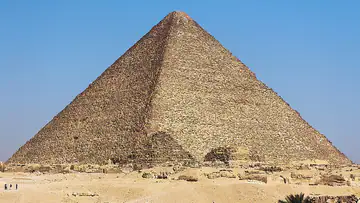
2560 BC: the Great Pyramid, a record of nearly 4,000 years
Completed around 2560 BC, the Great Pyramid of Giza originally stood about 146 metres tall. It has lost around ten metres since, as its outer casing and capstone disappeared. For almost four millennia, no human construction surpassed it. That took until the spire of Lincoln Cathedral in England, in the early 14th century.
This figure often surprises players. We picture Gothic cathedrals as much taller than the pyramids; in reality, most of them stay below.
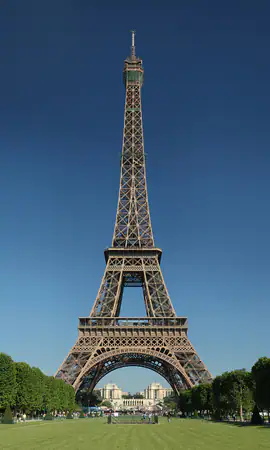
1889: the Eiffel Tower changes the scale
Built for the 1889 World’s Fair, the Eiffel Tower shot past 300 metres in one go. With its current antennas, it reaches 330 metres. It almost doubled the previous record, held by the Washington Monument obelisk (169 metres, 1884), and remained the tallest structure in the world for 41 years.
Its secret: puddled iron and an open lattice structure, very light for its size. A stone skyscraper of that height would have collapsed under its own weight.
1930-1931: the battle of New York
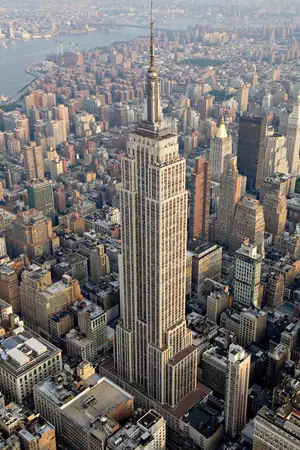
The 1920s saw a real race between New York skyscrapers. In 1930, the Chrysler Building (319 metres including its spire) overtook the Eiffel Tower. Less than a year later, in 1931, the Empire State Building beat it in turn: 381 metres to the roof, 443 metres with its antenna.
The Empire State Building held the title of world’s tallest building for almost 40 years, until the World Trade Center towers in the early 1970s.
1974-1998: Chicago, then Asia
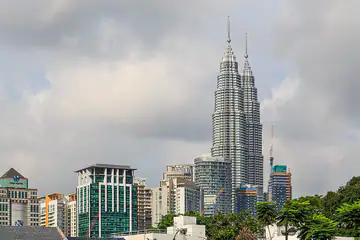
In 1974, Chicago’s Willis Tower (formerly the Sears Tower) reached 442 metres with its antennas. Then, in 1998, the record left the United States for the first time since 1930: the Petronas Towers in Kuala Lumpur were declared taller, at 452 metres.
That victory was controversial. The Petronas spires counted towards the total, while the Willis Tower’s antennas did not. Since then, rankings often distinguish architectural height (including spires, which are part of the building) from height to the tip of the antennas. In the game, the measurement used is shown under the answer.
2004-2010: Taipei 101, then the Burj Khalifa
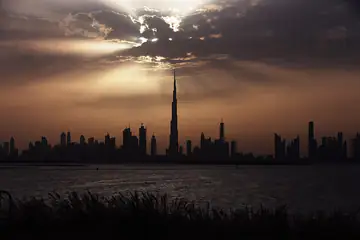
Taipei 101 (Taiwan) reached 508 metres in 2004. Then, in 2010, Dubai’s Burj Khalifa smashed every record at 828 metres. That is a leap of more than 300 metres: the Burj Khalifa is taller than the Eiffel Tower stacked on top of the Empire State Building.
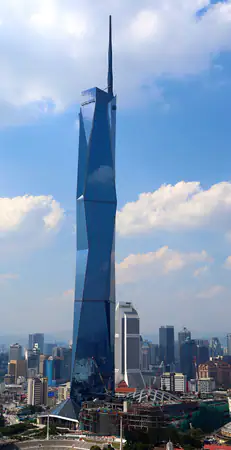
It has stayed on top for more than fifteen years. The world’s second-tallest building, Merdeka 118 in Kuala Lumpur, completed in 2023, stands 679 metres tall, 150 metres lower.
The current ranking
| Structure | Height | Completed |
|---|---|---|
| Burj Khalifa (Dubai) | 828 m | 2010 |
| Merdeka 118 (Kuala Lumpur) | 679 m | 2023 |
| Shanghai Tower | 632 m | 2015 |
| One World Trade Center (New York) | 541 m | 2014 |
| Taipei 101 | 508 m | 2004 |
| Petronas Towers | 452 m | 1998 |
| Empire State Building (antenna) | 443 m | 1931 |
| Willis Tower | 442 m | 1974 |
| Eiffel Tower | 330 m | 1889 |
| Great Pyramid (original height) | ≈ 146 m | c. 2560 BC |
TV towers: a category of their own
Telecommunication towers are not habitable buildings, but they often beat skyscrapers. Tokyo Skytree reaches 634 metres, more than the Shanghai Tower. Toronto’s CN Tower (553 metres, 1976) was the tallest free-standing structure in the world for more than thirty years. In the game, these towers face skyscrapers when the question is simply about height, which makes for some tricky duels.
What this race reveals
Two lessons stand out. First, progress is anything but steady: nearly 4,000 years of standstill, then the record multiplied by nearly five in barely 130 years. Second, records are almost always symbols: a country or city that wants to show its power. It is no coincidence that the title passed from Egypt to Paris, then to New York, and today to Dubai.
The next step is already under construction: Saudi Arabia’s Jeddah Tower aims for more than 1,000 metres. If completed, it will become the first human-made structure to reach one kilometre.
The right reflex in the game
Remember three reference points: the Eiffel Tower, 330 m; the Empire State Building, about 400 m; the Burj Khalifa, 828 m. Almost all famous skyscrapers fall between the last two. And be wary of ancient monuments: they rarely top 150 metres.