Who is really the fastest? From the sloth to the Parker probe
Speed is Comparo players’ favourite comparison, and one of the trickiest. Between a snail and a space probe lies a factor of more than ten million. To find your way around, here is the full ladder, in kilometres per hour, built from our card database.
One thing before we start
A “speed” is never a single number. For an animal, we take its peak over a few seconds; for an airliner, its cruising speed; for a train, its top speed in commercial service; for a sports car, its record. In the game, the kind of measurement is always shown under the answer (“in a dive”, “cruise”, “record”). That is often where the trap lies.
The slow ones: under 1 km/h
| Card | Speed |
|---|---|
| Garden snail | 0.05 km/h |
| Three-toed sloth | 0.24 km/h |
| Galápagos tortoise | 0.3 km/h |
A snail covers about one metre per minute. The sloth is not much quicker: it saves energy because its diet of leaves provides very little. The Greenland shark, at 2.6 km/h, is one of the slowest fish known, which does not stop it living for several centuries.
The runners: 30 to 112 km/h
| Card | Speed |
|---|---|
| Bottlenose dolphin | 35 km/h |
| African elephant | 40 km/h |
| Usain Bolt (peak) | 44.72 km/h |
| Ostrich | 70 km/h |
| Greyhound | 72 km/h |
| Lion | 80 km/h |
| Horse (record, quarter horse) | 88 km/h |
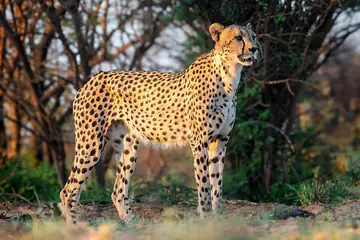
| Cheetah | 104 km/h |
| Common swift (level flight) | 112 km/h |
Two surprises in this table. First, the African elephant: at 40 km/h it runs almost as fast as Usain Bolt, despite its six tonnes. Second, the common swift, which beats the cheetah without even diving.
The cheetah deserves a caveat: it only holds its top speed for 200 to 300 metres. Over a kilometre, a horse or an antelope would leave it behind.
Ships: slower than you think
| Card | Speed |
|---|---|
| Titanic | 44 km/h |
| Queen Mary 2 | 55 km/h |
| USS Gerald R. Ford (aircraft carrier) | 56 km/h |
Giant ships top out around 25 to 30 knots. The reason is physical: water resistance rises very quickly with speed, and every extra knot costs a huge amount of power. The Titanic was therefore no faster than Usain Bolt at full stride.
Cars and trains: 68 to 603 km/h
| Card | Speed |
|---|---|
| Ford Model T | 68 km/h |
| Tesla Model 3 (Performance) | 261 km/h |
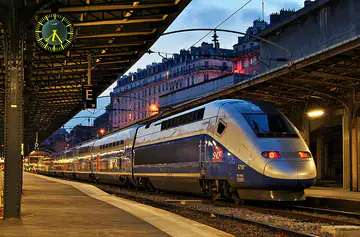
| TGV (top commercial speed) | 320 km/h |
| Formula 1 (record over a race weekend) | 372 km/h |
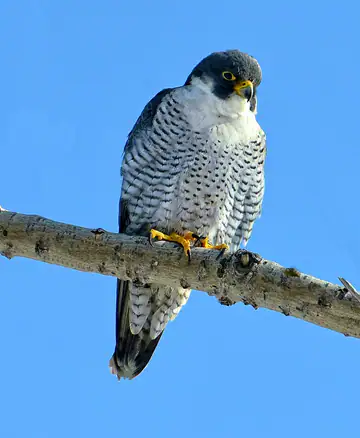
| Peregrine falcon (in a dive) | 389 km/h |
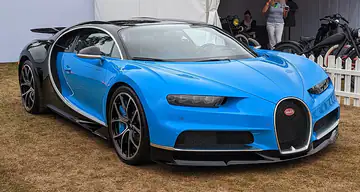
| Bugatti Chiron (Super Sport 300+ record) | 490 km/h |
| SCMaglev (world record, 2015) | 603 km/h |
The French TGV runs at 320 km/h in service, but its test record is far higher. Japan’s SCMaglev, a magnetic levitation train, reached 603 km/h in 2015: it floats above the track, with no wheel friction. And among the machines sits an animal: the peregrine falcon in a dive, faster than a Formula 1 car.
Planes: breaking the sound barrier
| Card | Speed |
|---|---|
| Cessna 172 (cruise) | 226 km/h |
| Boeing 747 (cruise) | 913 km/h |
| Speed of sound (air at 20 °C) | 1,235 km/h |
| ThrustSSC (land speed record, 1997) | 1,228 km/h |
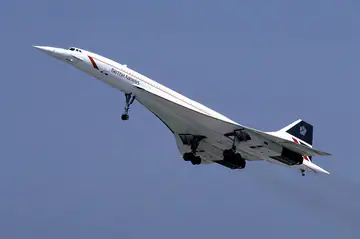
| Concorde (cruise) | 2,180 km/h |
| SR-71 Blackbird (record) | 3,530 km/h |
| X-15 (record) | 7,274 km/h |
ThrustSSC, a jet-powered car, has held the land speed record since 1997 at 1,228 km/h. It officially broke the sound barrier that day: the speed of sound depends on air temperature, and in the desert that morning it was lower than the 1,235 km/h measured at 20 °C. Concorde cruised at about twice the speed of sound, and the X-15 rocket plane passed Mach 6 in the 1960s.
Space: a change of scale
| Card | Speed |
|---|---|
| International Space Station | 27,600 km/h |
| Space Shuttle (in orbit) | 28,000 km/h |
| New Horizons (record launch speed) | 58,500 km/h |
| Voyager 1 (relative to the Sun) | 61,000 km/h |
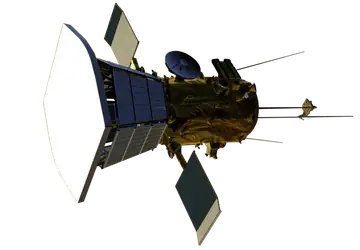
| Parker Solar Probe (record, 2024) | 692,000 km/h |
At 27,600 km/h, the International Space Station circles the Earth in about an hour and a half. The Parker probe, which skims the Sun, is the fastest object humanity has ever built: at 692,000 km/h it would link Paris and New York in under 40 seconds.
Why speed fools us
Our brain judges speed by watching movement, and what we see depends on size and distance. An airliner high in the sky looks slow; a small bird darting just above the ground looks lightning-fast. Big objects give an impression of majestic slowness (the Titanic) or of power (a locomotive), with no direct link to their actual speed.
The best strategy in the game is to keep a few fixed reference points in mind: a sprinting human, about 40 km/h; a car on the motorway, 130; a high-speed train, 320; an airliner, 900; sound, about 1,200. With those five values in your head, most speed duels become much easier.