The biggest animals of all time (and the ones we overestimate)
Ask people what the biggest animal that ever lived is, and many answer “a dinosaur”. That is wrong, and not by a small margin. Here are the giants of the animal kingdom, living and extinct, with the figures from our card database and a few myths to correct along the way.
A word of caution about estimates
For living animals, weights are measured on real individuals. For extinct species, they are reconstructed from skeletons that are often incomplete: a vertebra, a thigh bone, a few teeth. Palaeontologists therefore give ranges, sometimes wide ones. In the game these values are marked as estimates, and two animals whose ranges overlap are never pitted against each other: the answer would not be certain.
The podium: whales ahead of dinosaurs
| Animal | Weight | Length |
|---|---|---|
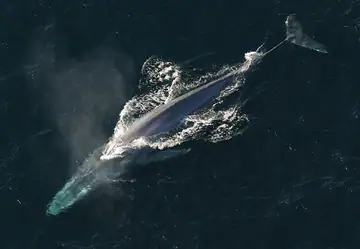
| Blue whale | ≈ 150 t (100 to 190) | ≈ 25 m |
| Bowhead whale | 80 t | 16 m |
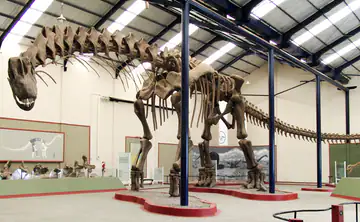
| Argentinosaurus (extinct) | ≈ 70 t (50 to 100) | ≈ 35 m |
| Fin whale | 60 t | 22 m |
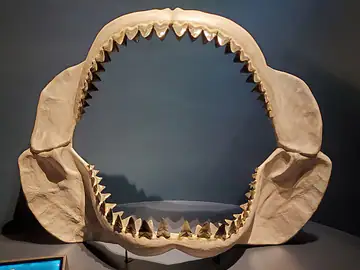
| Megalodon (extinct) | ≈ 50 t (30 to 100) | ≈ 16 m |
| Sperm whale (male) | 41 t | 16 m |
| Brachiosaurus (extinct) | ≈ 40 t (28 to 58) | ≈ 22 m |
The blue whale is, as far as we know, the heaviest animal in the entire history of life on Earth. It weighs about twice as much as Argentinosaurus, the heaviest of the well-known dinosaurs. Its heart alone weighs several hundred kilos.
Argentinosaurus does keep one record: it was longer. With its huge neck and tail it reached around thirty metres, against about 25 for the blue whale. Long does not mean heavy: a sauropod is built like a suspension bridge, with bones lightened by air pockets.
Why the giants live in water
On land, an animal has to carry its weight on its legs. Double an animal’s size and its weight is multiplied by eight, but the cross-section of its bones only by four. There is therefore a physical limit to gigantism on land. In water, buoyancy supports the body: the whale does not have that problem, and it feeds on krill, a vast resource that is easy to swallow in huge quantities.
The predators: T. rex versus the elephant
| Animal | Weight |
|---|---|
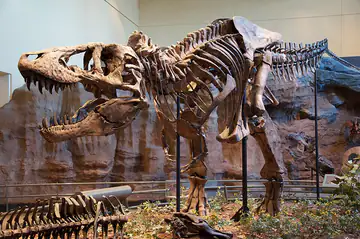
| Tyrannosaurus rex (extinct) | ≈ 8.4 t (5 to 14) |
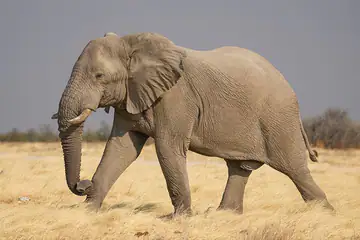
| African elephant (male) | 6 t |
| Orca (male) | 6 t |
| Great white shark | 900 kg |
| Saltwater crocodile (male) | 500 kg |
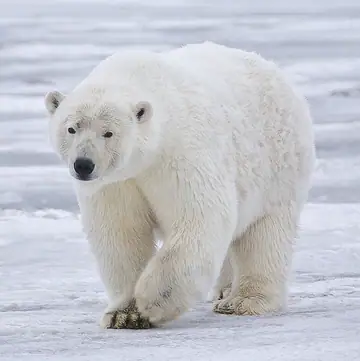
| Polar bear (male) | 450 kg |
| Grizzly bear (male) | 270 kg |
| Tiger (male) | 220 kg |
| Lion (male) | 190 kg |
T. rex was heavier than an adult African elephant, making it one of the biggest land predators in history. The orca weighs as much as an elephant: it is the largest of the dolphins.
Two myths fall in this table. First, the tiger is heavier than the lion: it is the biggest of the cats. Second, the polar bear clearly outweighs the grizzly: it is the largest land carnivore alive today.
The longest: snakes, squid and sharks
| Animal | Length |
|---|---|
| Whale shark | 10 m |
| Giant squid (large female) | 12 m |
| Basking shark | 8 m |
| Reticulated python (large adult) | 6 m |
| Green anaconda | 5 m |
| Great white shark | 4.5 m |
The whale shark, at 10 metres, is the largest fish in the world, yet it feeds on plankton and cruises at 5 km/h. The great white shark, famous from the movies, is much smaller: 4.5 metres on average.
Among snakes, the anaconda and the python are often compared. The reticulated python is the longest (6 metres and more), but the green anaconda is bulkier: at the same length it weighs far more. It is a good example of a duel where the exact question (“longest” or “heaviest”) changes the answer.
The ones we overestimate
- The megalodon. Popular reconstructions often show it swallowing a whole whale. Serious estimates put it at around 16 metres and 50 tonnes: enormous for a shark, but three times lighter than a blue whale.
- The gorilla. An adult male weighs about 160 kg: impressive, but less than a lion. Its build and strength give an impression of greater mass.
- The ostrich. The largest living bird weighs about 120 kg, roughly as much as a very heavy-set man, no more.
And the ones we underestimate
- The hippopotamus, about 1.5 tonnes, heavier than a male giraffe (1.2 tonnes).
- The southern elephant seal: a male reaches 3 tonnes, half an African elephant.
- The walrus, which weighs as much as a giraffe.
The right reflex in the game
Faced with two animals, ask yourself three questions: does it live in water? (the absolute giants all do); is the question about weight or length?; is the value an estimate? For extinct species the ranges are wide, and the game only offers duels where the gap stays clear even in the worst case.