10 comparisons that fool almost everyone


Comparo boils down to one question: which of the two is bigger, faster, older? Most of the time, gut feeling is enough. But some pairs catch it out completely. Here are ten match-ups taken from our card database, with the real figures and, above all, the reason our brain gets them wrong.
1. The common swift is faster than the cheetah
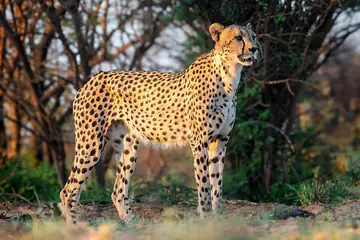
The cheetah is the land sprint champion: around 104 km/h at full speed (measurements range from 93 to 112 km/h). But in level flight, without diving, the common swift has been clocked at 112 km/h. A 40-gram bird beats the fastest cat on Earth.
Why we get it wrong: we link speed to muscle power and size. A bird, however, does not have to carry its weight on legs: the air holds it up, and its aerodynamics do the rest.
2. Usain Bolt is (slightly) faster than the Titanic
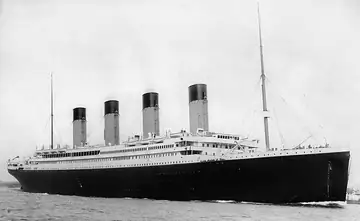
During his 100 m world record in 2009, Usain Bolt reached a peak speed of 44.72 km/h. The Titanic’s top speed was about 24 knots, or 44 km/h. Over a few metres, the fastest man in the world would have edged out the liner.
Why we get it wrong: something huge feels like it must be fast. But a ship’s mass works against it: pushing 50,000 tonnes through water takes enormous energy for every extra kilometre per hour.
3. An ostrich outruns a Ford Model T
The Ford Model T, the iconic car of the 1910s and 1920s, topped out at 68 km/h. An ostrich runs at 70 km/h. It could have overtaken most drivers of its day.
4. A diving falcon beats a Formula 1 car
In a hunting dive, the peregrine falcon reaches 389 km/h, the highest speed ever measured in an animal. The speed record for a Formula 1 car over a race weekend is 372 km/h. The bird wins, with no engine.
Why we get it wrong: we instinctively compare an animal’s cruising pace with a machine’s top speed. Here it is the other way round: the falcon uses gravity as its accelerator.
5. Two moons bigger than a planet
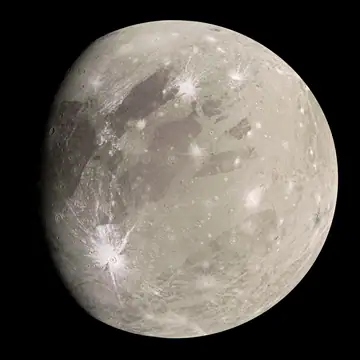
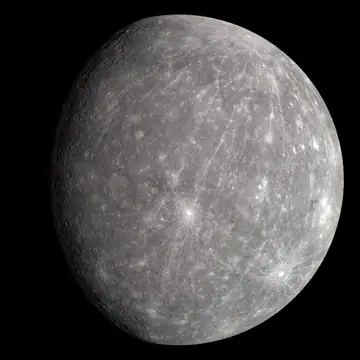
Ganymede, Jupiter’s largest moon, is 5,268 km across. Titan, Saturn’s largest moon, is 5,150 km. Mercury, a planet, is only 4,879 km. Both moons are wider (though not heavier: Mercury is far denser).
Why we get it wrong: “planet” sounds big and “moon” sounds small. The classification says nothing about size: a moon is simply an object orbiting a planet, whatever its dimensions.
6. The biggest animal of all time is alive today
It is tempting to think giant dinosaurs hold every record. Yet the blue whale weighs around 150 tonnes (between 100 and 190 depending on the individual). Argentinosaurus, one of the largest dinosaurs known, is estimated at about 70 tonnes, and the megalodon, the giant prehistoric shark, at about 50 tonnes.
Why we get it wrong: extinct animals impress us through mystery, and their reconstructions are spectacular. But water supports a whale’s weight, which lets it reach masses that are impossible on land.
7. An avocado has almost as many calories as chicken breast
Per 100 grams, an avocado provides 160 kcal, a roasted chicken breast 165 kcal and cooked pasta 158 kcal. Often filed under “light” foods, the avocado is actually rich in fat (healthy fat, but calories all the same).
The other way round, a banana (89 kcal per 100 g) has twice the calories of the same amount of Coca-Cola (42 kcal per 100 ml). That does not make soda the better choice: the banana brings fibre and vitamins, the soda almost nothing but sugar.
8. Pepper spray is hotter than the world’s hottest chili
The Carolina Reaper, long the record holder for the hottest chili, averages 1.64 million Scoville units. Police pepper sprays sit between 2 and 5.3 million. And pure capsaicin, the molecule behind the heat, reaches 16 million.
Why we get it wrong: we assume a food must be the peak of heat. In reality, industrial products concentrate capsaicin far beyond what any plant can produce.
9. Snoop Dogg and Elon Musk are the same age
Both were born in 1971. Likewise, Brad Pitt, Johnny Depp and Michael Jordan were all born in 1963, and Keanu Reeves was born the same year as Jeff Bezos (1964).
Why we get it wrong: we judge a celebrity’s age by the era in which we discovered them and the image they project, not by their birth date. A 1990s rapper feels like “another generation” from a tech entrepreneur, even though they were born months apart.
10. The Great Pyramid was the tallest human-made structure for about 3,800 years
Completed around 2560 BC, the Great Pyramid of Giza originally stood about 146 metres tall. No human construction surpassed it until the spire of Lincoln Cathedral in England, in the 14th century. For comparison, the Eiffel Tower (1889) now reaches 330 metres with its antennas, and the Burj Khalifa (2010) 828 metres.
Why we get it wrong: we picture progress as a straight line. In fact, the race for height stood still for millennia, then took off in little more than a century.
What these mistakes have in common
In almost every case, our brain swaps the question asked for an easier one: which one seems more impressive? The Titanic is huge, so it must be fast. The dinosaur is legendary, so it must be the heaviest. Psychologists call this a heuristic: a mental shortcut, often useful, sometimes misleading.
That is exactly what makes the game fun. Every answer reveals the true value, and you learn most from the ones you got wrong. All the values in this article come from our card database, with their sources; some are estimates (especially for extinct animals) and are shown as such in the game.