How long do animals live? From the 300-year shark to the one-day mayfly
Two animal questions keep coming back in Comparo: which lives longer? and which carries its young longer? In both cases, the “bigger means longer” intuition works… sometimes. And when it fails, it fails spectacularly.
Longevity records
| Animal | Lifespan |
|---|---|
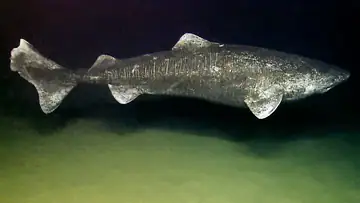
| Greenland shark | ≈ 300 years (estimated from eye-lens dating) |
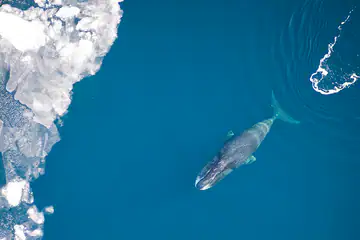
| Bowhead whale | ≈ 200 years (can exceed 200 years) |
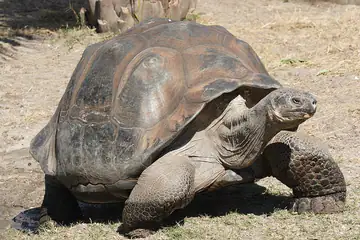
| Galápagos tortoise | ≈ 100 years (often more) |
| Coelacanth | ≈ 100 years |
| Giant clam | ≈ 100 years |
| Fin whale | ≈ 90 years |
| Blue whale | ≈ 85 years |
| Green sea turtle | ≈ 80 years |
| Great white shark | ≈ 70 years |
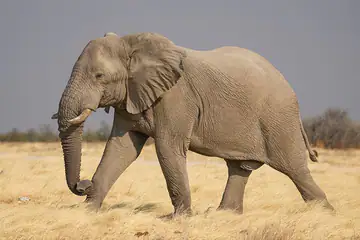
| African elephant | ≈ 65 years |
The Greenland shark, absolute champion
This shark of the icy North Atlantic grows about one centimetre a year. To estimate its age, researchers radiocarbon-dated the lens of its eyes, which forms before birth: the largest individuals studied would be around three centuries old, perhaps more. A Greenland shark born in the early 18th century could still be swimming today.
Cold and slowness play a key role: its metabolism is extremely slow. Our database even lists a cruising speed of about 2.6 km/h, one of the lowest among fish.
Cold and slowness, the secrets of a long life
The bowhead whale, which lives in the Arctic, is the longest-lived mammal known: 19th-century harpoon heads have been found in living individuals. Giant tortoises, with their slow metabolism, often pass the century.
Conversely, small, fast animals with a high metabolism live short lives:
| Animal | Lifespan |
|---|---|
| Brown rat | ≈ 2 years |
| Common octopus | ≈ 2 years |
| House mouse | ≈ 1 year |
| Honey bee (summer worker) | ≈ 6 weeks |
| Housefly | ≈ 4 weeks |
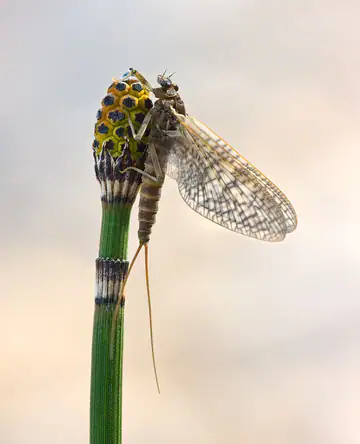
| Mayfly (adult) | ≈ 1 day |
The octopus is a striking exception: despite remarkable intelligence, it usually dies after its first breeding, at around two years. As for the mayfly, its adult life lasts only about a day… but its larva lives much longer underwater. Comparo always states what the value measures (“adult stage”).
Gestation: from 13 days to nearly two years
| Animal | Gestation |
|---|---|
| African elephant | ≈ 645 days |
| Asian elephant | ≈ 620 days |
| Orca | ≈ 517 days |
| White rhinoceros | ≈ 490 days |
| Sperm whale | ≈ 480 days |
| Giraffe | ≈ 453 days |
| … | |
| Golden hamster | ≈ 16 days |
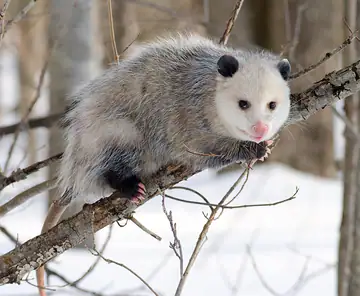
| Virginia opossum | ≈ 13 days |
An elephant carries her calf for about 21 months, almost two years: the record among land mammals. The calf is born weighing over a hundred kilos and able to walk very quickly, which requires a long development.
The trap is at the other end: the opossum has a gestation of only about 13 days. Like kangaroos, it is a marsupial: the baby is born tiny, then finishes developing in its mother’s pouch. A short gestation does not mean a short development.
Traps in the game
- Size helps, but not always. A 250 kg tortoise outlives a six-tonne elephant; a small, motionless giant clam lives more than a century.
- Cold lengthens life. Polar-water sharks and whales break records.
- Marsupials = very short gestations, whatever their adult size.
- Read the note under the answer: adult life or full cycle, average or record.
Where the numbers come from
Lifespans are typical values observed in the wild or in captivity, taken from the scientific literature; for very long-lived species they are estimates (flagged as such). See our method.