The solar system: the real sizes of planets, moons and stars
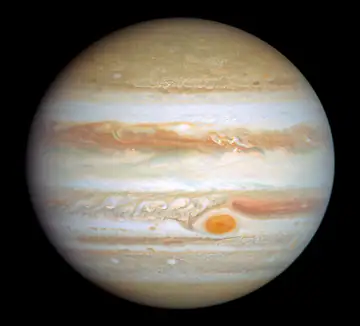
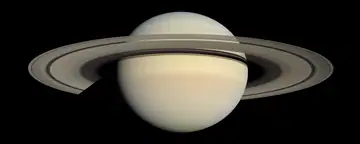
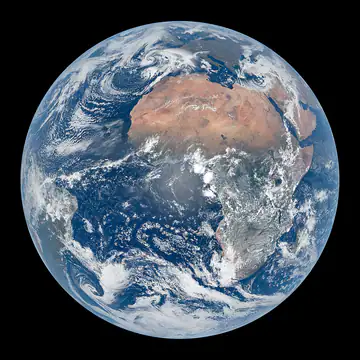
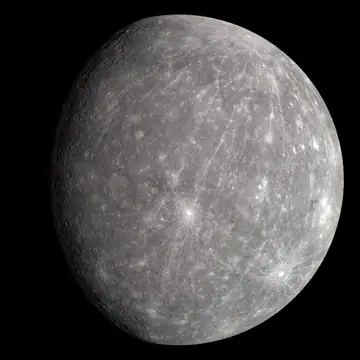
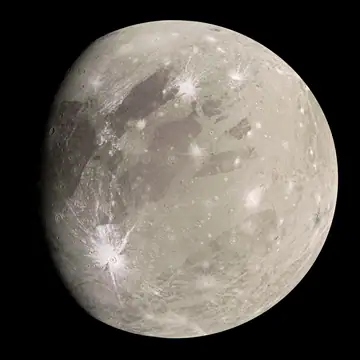
Space is the favourite playground of huge numbers, and it is where intuition gives up fastest. Textbook illustrations that line the planets up side by side completely distort the proportions. Here is the solar system as it really is, based on the values in our card database.
Diameters: giant moons and a modest Earth
| Body | Diameter |
|---|---|
| Sun | 1,392,700 km |
| Jupiter | 139,820 km |
| Saturn | 116,460 km |
| Uranus | 50,724 km |
| Neptune | 49,244 km |
| Earth | 12,742 km |
| Venus | 12,104 km |
| Mars | 6,779 km |
| Ganymede (moon of Jupiter) | 5,268 km |
| Titan (moon of Saturn) | 5,150 km |
| Mercury | 4,879 km |
| Callisto (moon of Jupiter) | 4,821 km |
| Io (moon of Jupiter) | 3,643 km |
| Moon | 3,474 km |
| Europa (moon of Jupiter) | 3,122 km |
Three things to remember:
- The Sun is about 109 times Earth’s diameter, and Jupiter about 11 times. You could line up around ten Earths across Jupiter.
- Venus is almost Earth’s twin in size (12,104 km against 12,742). Earth–Venus duels are among the closest in the game.
- Two moons are bigger than a planet: Ganymede and Titan are wider than Mercury. Callisto is only just smaller. Our own Moon is only the fifth-largest moon in the solar system. Pluto, at about 2,400 km, is even smaller than the Moon.
Gravity: Saturn almost like Earth
| Body | Surface gravity |
|---|---|
| Sun | 274 m/s² |
| Jupiter | 24.79 m/s² |
| Neptune | 11.15 m/s² |
| Saturn | 10.44 m/s² |
| Earth | 9.81 m/s² |
| Venus | 8.87 m/s² |
| Uranus | 8.69 m/s² |
| Mars | 3.72 m/s² |
| Mercury | 3.70 m/s² |
| Moon | 1.62 m/s² |
| Pluto | 0.62 m/s² |
This is the table that surprises people most. Saturn, more than nine times wider than Earth, has a gravity barely higher than ours (10.44 against 9.81 m/s²). Uranus even has lower gravity than Earth.
Two factors explain it. Surface gravity depends on mass, but also on the distance to the centre: the wider a planet, the farther its “surface” is from its centre, which weakens the pull. And the gas giants are not very dense: Saturn is even less dense than water. For them, gravity is measured at the cloud tops, since there is no ground.
Another tricky duel: Mars and Mercury have almost the same gravity (3.72 and 3.70 m/s²), even though Mars is much bigger. Mercury makes up for it with its density: its iron core is huge.
Length of day: Venus, the lazy planet
| Body | One rotation |
|---|---|
| Venus | 5,832 hours (≈ 243 Earth days) |
| Mercury | 1,408 hours (≈ 59 days) |
| Moon | 656 hours (≈ 27 days) |
| Mars | 24.6 hours |
| Earth | 23.9 hours |
| Uranus | 17.2 hours |
| Neptune | 16.1 hours |
| Saturn | 10.7 hours |
| Jupiter | 9.9 hours |
Venus spins once every 243 Earth days, while it orbits the Sun in about 225 days. A rotation of Venus therefore lasts longer than a Venusian year. On top of that, it spins in the opposite direction to most planets.
At the other extreme, Jupiter, the largest planet, is also the fastest spinner: a day there lasts less than ten hours. That rapid rotation visibly flattens it at the poles.
Mars has a day almost identical to ours: 24 hours and 37 minutes. The teams who drive the Mars rovers often live on “Mars time”, shifting their day by 40 minutes every day.
Distances: the real emptiness
| Planet | Average distance from the Sun |
|---|---|
| Mercury | 57.9 million km |
| Venus | 108.2 million km |
| Earth | 149.6 million km |
| Mars | 227.9 million km |
| Jupiter | 778.5 million km |
| Saturn | 1.43 billion km |
| Uranus | 2.87 billion km |
| Neptune | 4.52 billion km |
| Pluto | 5.91 billion km |
The four rocky planets are packed close to the Sun; after that, distances explode. Neptune is thirty times farther from the Sun than Earth. Sunlight takes about 8 minutes to reach us, and more than 4 hours to reach Neptune.
And the stars?
The Sun looks huge next to the planets, but it is a fairly ordinary star. Betelgeuse, Orion’s shoulder, is estimated at around a billion kilometres across: placed at the centre of the solar system, it would swallow at least the orbit of Mars. The largest known stars, such as UY Scuti or Stephenson 2-18, are estimated at more than a thousand times the Sun’s diameter. These values remain very uncertain, and the game presents them as estimates.
The right reflex in the game
For sizes, remember the order: Jupiter, Saturn, Uranus, Neptune, Earth, Venus, Mars, then the big moons, Mercury, and finally our Moon. For gravity, be wary of the gas giants: only Jupiter (by far), Neptune and Saturn (narrowly) beat Earth. And for the length of day, remember that the giant planets spin fast, Venus and Mercury very slowly.